About us
Waste Management Division within the Ministry of Infrastructure Cook Islands plays a vital role in overseeing the safe and efficient disposal of both liquid and solid waste in Rarotonga. With a team of 14 dedicated staff members located in Rarotonga, the division works diligently to ensure the proper monitoring and disposal of waste materials.
The Waste Facility, which includes the Landfill, Oxidation Ponds, and Recycling Centers, serves as a central hub for waste management activities within Rarotonga. In addition to managing waste within Rarotonga, Waste Management also provides assistance to the Pa Enua, extending support efforts across the Cook Islands.
Waste Management strives to uphold high standards of waste disposal and environmental sustainability.

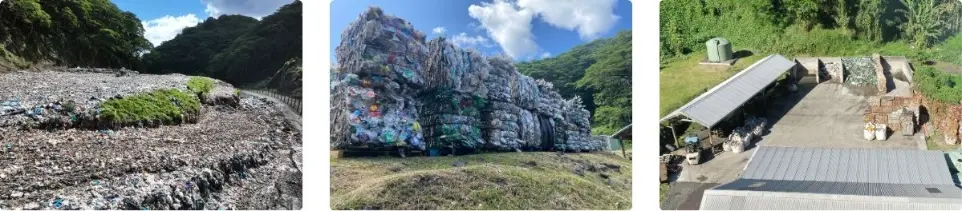
Goal: Zero Waste Cook Islands
Establishing a Sustainable Ecological System Through a Comprehensive Zero-Waste Strategy
Our primary goal is to develop a comprehensive zero-waste strategy that incorporates various measures, including resource conservation, recycling, composting, and optimization. This approach differs from the conventional linear economic framework, which prioritizes resource extraction and landfill disposal. Instead, we aim to implement a circular economic model that minimizes waste generation and continually reuses resources within the system. Our ultimate objective is to establish a sustainable ecological system that produces zero waste.

Solid and Hazardous Waste Bill 2024
The Cook Islands' economy, environment, and public health are endangered by the importation of non-biodegradable consumer goods. The mounting quantities of non-biodegradable waste accumulating in waste facilities and illegal dumpsites pose a significant threat, as the waste ultimately makes its way into waterways.
To address this alarming issue, Infrastructure Cook Islands (ICI) has put forth a policy proposal to Cabinet, which aims to prohibit the importation of certain single-use plastic products. The policy initially targeted single-use polystyrene packaging, but has since broadened to include other single-use items such as lightweight plastic bags, plastic straws, and plastic cutlery.